How AI will reshape the flex market within 18 months
Five years ago, flex office space was still widely treated as a niche within commercial property. Today, it sits much closer to the centre of the market.
The flex market has moved at extraordinary speed. But that period of extreme growth is now giving way to a new challenge: optimisation.
That maturity is already changing how the market operates. Management agreements now account for 41% of UK flex operator deals, up from just 9% before Covid. This shift demonstrates that landlords increasingly view flex as a permanent part of their portfolios rather than an experimental offer.
Growth at any cost is no longer enough. Investors want longer agreements, less churn and more profitable spaces. They want better EBITDA.
The explosion of AI has arrived at exactly the same time. Operators already need to improve how they sell and run their spaces. AI will accelerate that change.
The combined effect is clear. Operators that do not move quickly risk falling behind. If they cannot improve profitability, investors will look elsewhere. If their systems cannot be found and understood by AI, customers may look elsewhere too.
What could this look like in 18 months?
Most people currently use AI to produce content or answer questions. Over the next 18 months, AI agents will become much better at holding context, connecting with business systems and completing work.
Imagine Lucy tells her personal AI agent: My team has expanded. Find me a new office for everyone.
She provides no further detail.
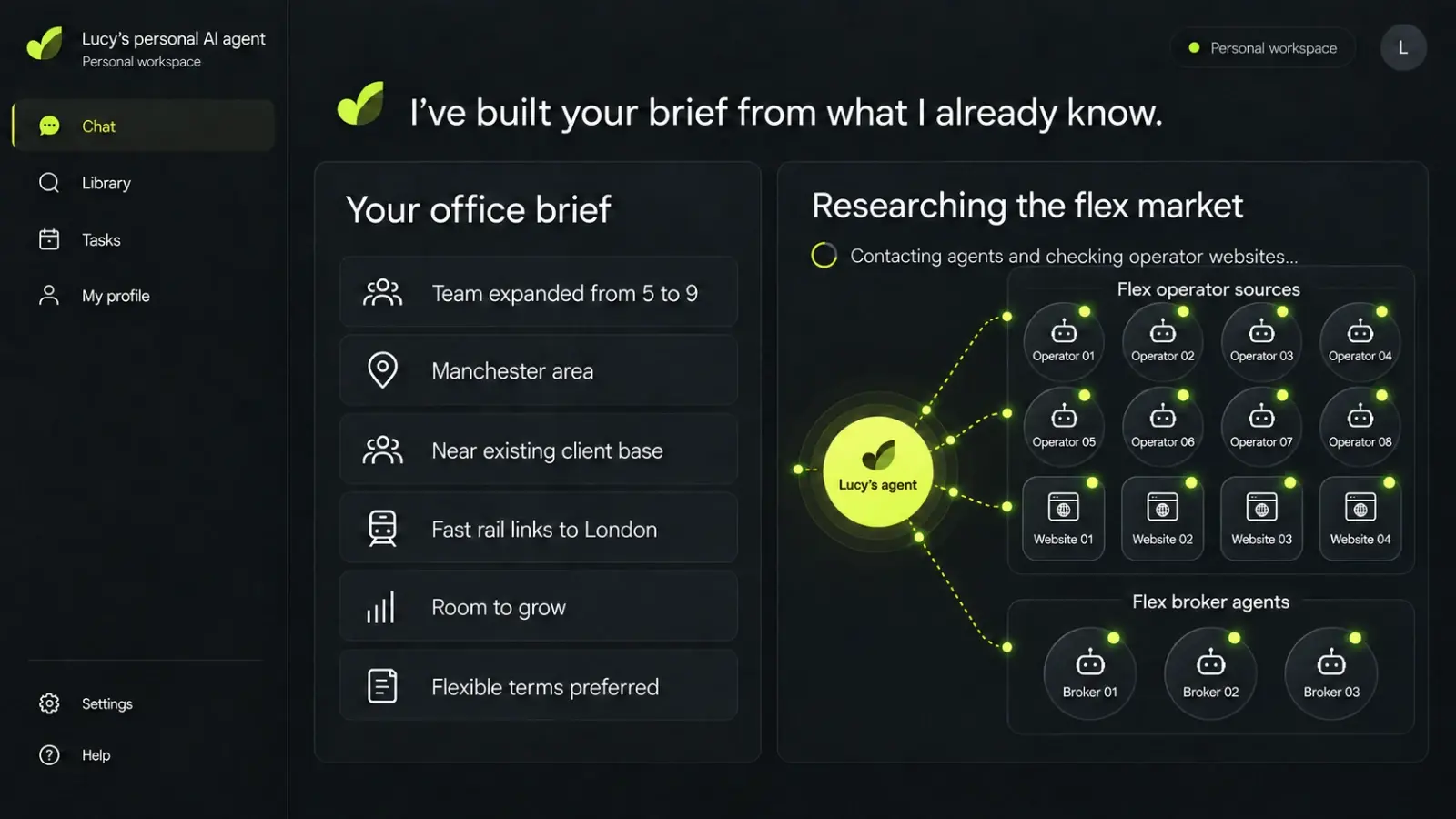
Her agent already knows the team has grown from five to nine people. It knows they need to remain close to their Manchester clients, require good rail access to London and want enough room to grow.
The agent builds the brief itself. It researches flex operator websites and contacts AI agents belonging to operators and brokers.
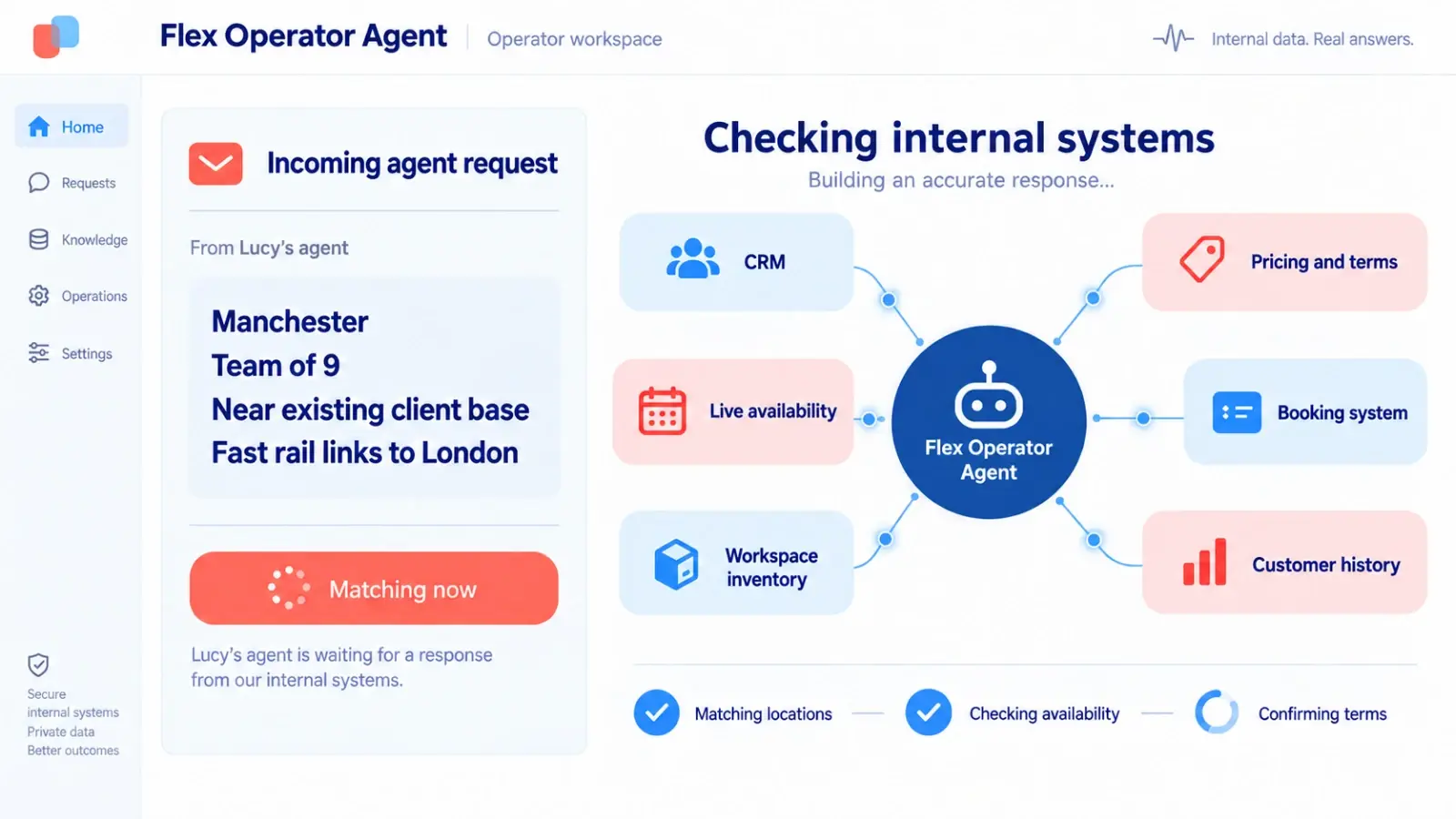
Those agents check their internal systems for live availability, pricing, customer history and viewing times before returning suitable options.
Lucy never visits a website or selects a filter. She receives three relevant locations and finds the viewings already sitting in her diary. Travel time has been included, with two appointments arranged for days when she will already be nearby visiting clients.
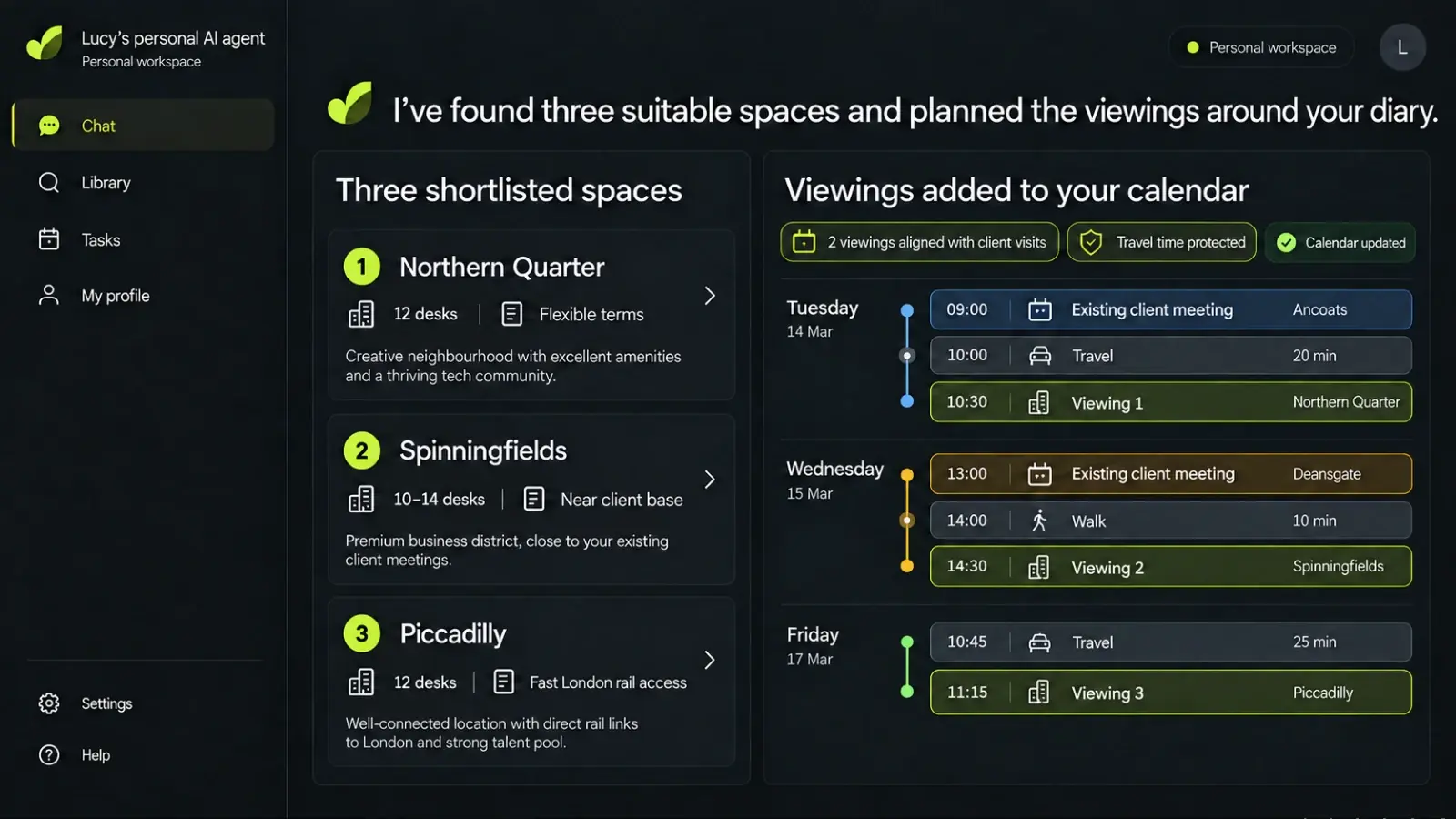
Some will see this as far-fetched. But every individual part of the journey is already possible. The next 18 months will bring those parts together.
AI activity is not the same as AI value
AI can accelerate customer and member journeys. It can improve the speed and quality of every response. It can also automate repeatable work and release teams for more valuable activity.
That is the opportunity. But there is a lot of noise.
PwC's 29th Global CEO Survey found that 56% of CEOs had seen neither increased revenue nor reduced costs from AI during the previous 12 months.
Buying AI is easy. Creating value from it is harder.
The real question is whether you are applying it to the right problems, supported by the right systems and data, with a commercial outcome you can measure.
How do you make sure your business ends up on the successful side of that divide?
Why operators need to start now
AI technology may move quickly. Operational change does not.
Connecting a CRM, workspace platform, website and booking system takes time. So does deciding which data can be trusted and putting controls in place.
If systems disagree, an operator agent may return the wrong availability or price. If information is difficult to access, the operator may not appear in the shortlist at all.
The danger is not simply a poor chatbot. It is losing the customer before a salesperson knows the enquiry existed.
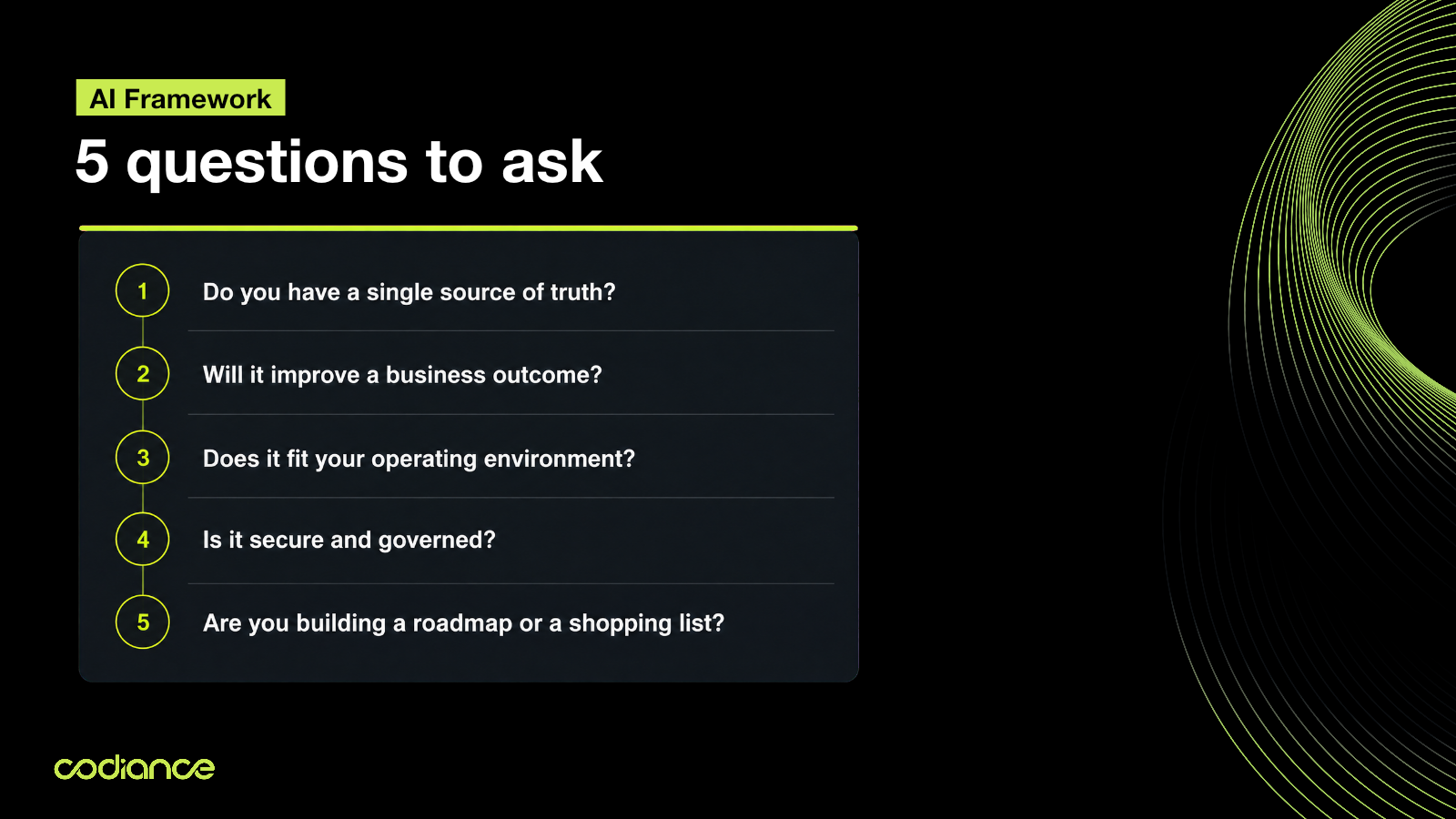
Operators do not need to build a fully autonomous agent tomorrow. They do need to prepare for one:
- Create a reliable source of truth. Decide which systems own availability, pricing, inventory and customer data, and keep that information aligned.
- Connect the operating environment. AI needs access to the relevant CRM, website, workspace platform and booking systems to provide a meaningful answer.
- Choose a measurable outcome. Record the current response time, enquiry-to-viewing conversion or manual workload before testing anything.
- Set clear controls. Decide what AI can access, what it can do automatically and where a person must approve its decisions.
- Build a roadmap. Prioritise a small number of valuable opportunities instead of buying disconnected AI tools.
Start with one real journey
The enquiry-to-viewing journey is a sensible place to begin. Map how an enquiry arrives, how it is qualified, where availability is checked and what delays the first useful response.
That may reveal an opportunity for AI. It may also show that better integration, cleaner data or a straightforward rules engine would solve the problem more reliably.
AI must form part of the strategy, but it will not improve every process.
By 2028, the complete experience described above may not be universal. But parts of it will be practical, and customers will notice which operators can respond with accurate, relevant information.
The operators that start now are not betting on one AI product. They are making sure their businesses can take part in the next version of the flex market.
Codiance works across enterprise AI, bespoke software, integration and compliance. If you want to understand how prepared your systems are, get in touch.